
Trace Former Radford City Property Owners
Tracing former owners of a Radford City property means walking a recorded chain of deeds backward, grantee by grantee. The path runs through the Circuit Court Clerk's grantor-grantee land index. Radford property records make that possible. Each deed names who conveyed and who received. Each match hinges on the parcel's PIN and legal description staying the same. Coverage limits exist. Index years, scanned books, and document images do not all line up online. A missing image never ends a property search. Older deed books, plats, and local-history collections fill gaps whenever the remote view stops short of an answer.
| Transfer Step | Date to Record | Grantor to Grantee | Document Reference |
|---|---|---|---|
| Newest matching deed | Use date shown on instrument | Current grantee to prior grantor | PIN, deed ref, or instrument ID |
| Prior conveyance | Read from earlier filing | Prior owner as grantee, earlier party as grantor | Book/page or instrument reference |
| Estate transfer, if present | Use deed or court-file date | Executor, administrator, or estate party | Land or fiduciary index reference |
| Older volume entry | Use volume's own date | Match the same legal description | Clerk book, plat, or microfilm citation |
For recent Radford transfers, open SRA and follow the grantee name backward. When the online property search stops, the Clerk can point to the deed book, plat book, fiduciary volume, or microfilm. Those holdings contain the next record. The New River Room and university archives help explain a house or family timeline. They never replace the recorded instrument itself.
Radford Index and Image Years Differ
The Circuit Court Clerk places scanned land-index material at January 1918. Online deed indexing starts in April 2000. Images run incomplete before May 30, 1999. A former-owner search can still land a name or reference without opening the image. An online cutoff is not the legal start of Radford ownership.
Once the remote trail runs out, call the Clerk at 540-731-3610 or visit the counter. Ask about deed books, grantor-grantee indexes, plats, wills, fiduciary files, or microfilm. The pre-1918 volume run and shelf guide were never published in the local material. Ask staff instead of assuming a year or location.
The Radford SRA coverage notice lists the local index and image limits. The Virginia SRA/COVERS portal is the remote index entry point.
Check the coverage note first. It tells you whether Radford City records for your years are online or still require a request to the Clerk.
Radford's Older Images Need a Second Route
Radford separates index access from image access. Under the statewide SRA description, index-only use can be free where enabled. Images require a subscriber approved by the local Clerk. Posted options run $50 per month or $300 per year for an individual. Business pricing is separate. Older entries may still lack an image even after a successful property search.
The Clerk accepts a mailed SRA application at 619 Second Street, Attn. SRA, and the counter handles access questions too. Counter copy prices were not stated in the local materials. Call before relying on a pre-1999 image or traveling for an old volume. Ask which deed, plat, will, or fiduciary series covers the date you need.
The Clerk's subscription page explains the application route. The SRA land-record screen opens the index that starts a chain.
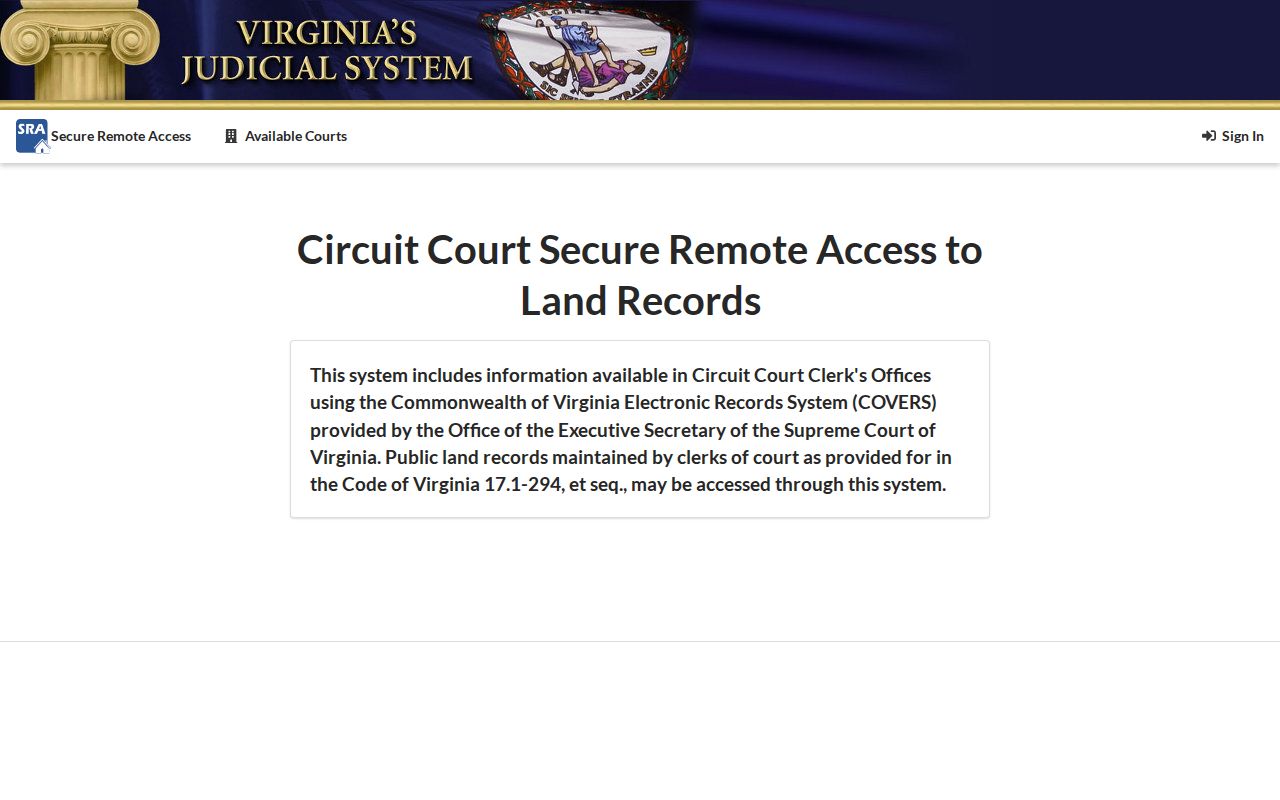
Preserve the exact citation for a counter or deed-book search whenever an image is unavailable.
Walk the Radford Grantor-Grantee Chain Backward
A grantor conveys the interest. A grantee receives it. To trace former owners, search the latest grantee. Read that deed's grantor, then search that prior party as an earlier grantee. Repeat only after confirming the parcel's PIN, lot, and legal description still match. That check keeps a Radford chain tied to one tract. It rules out a name that merely recurs.
Log every step with the instrument date, parties, document type, and reference. If a deed is indexed under an estate or a company, search that exact wording. Chains can branch through probate, a trust, joint ownership, a plat split, or a release. Read each event within its own filing.
- Find the latest deed that matches the Radford PIN or legal description.
- Copy the grantee and grantor as written, plus date and Clerk reference.
- Search the prior grantor as an earlier grantee and match the land text again.
- When the remote range ends, ask the Clerk which older book or microfilm series continues it.
- Grantor and grantee
- The conveying party and the recipient named in a recorded instrument.
- Chain of title
- The sequence of recorded conveyances affecting the same parcel.
- Reverse index
- A search method that follows an earlier grantee back as a later grantor.
- Legal description
- Land text used to identify the tract when an old street address differs.
Estates and Plats Can Change the Radford Chain
A Radford property can pass through an executor or administrator deed. It can also pass through a will, a fiduciary record, a trust instrument, or a court order. SRA holds Wills and Fiduciaries from June 2000 onward. Older probate material may sit in the Clerk's books or Library of Virginia holdings. Search the estate and the prior owner's name. Then tie each result back to the land description.
Plat changes matter just as much. A subdivision plat or lot split can alter how a parcel is described across decades. The Clerk records plats, and GIS exposes LOTS, SUBDIVISION, LOT_NUMBER, and PLAT_REF fields. A former owner may have conveyed only part of a larger tract. So compare the plat and the deed before treating a later lot as the same whole parcel. The Radford land-record requirements explain how plats attach to filings.
Radford House History Adds Human Context
The Ann H. Fisher New River Room at the Radford library holds newspapers, obituaries, yearbooks, microfilm, digitized letters, and online collections. Radford News Journal stories and family letters can tie a parcel to a past resident, a school, a business, or a neighborhood event. Yearbook holdings run from 1922 to the present. That is real human context for a deed chain.
Treat these sources as background, though. An obituary or directory entry does not prove title. The library publishes no complete city-directory year run, so ask staff about Polk, telephone, and reverse-directory holdings instead. Radford University archives also hold City of Radford and Appalachian Collection material, including maps, civic files, and home-history clues worth a look.
The New River Room page lists local-history sources. The Radford City Collection finding aid describes university archival holdings.
Radford Legal Text Beats an Old Street Name
Newspapers, yearbooks, archives, planning agendas, and directory materials can all help rebuild an address history in Radford. Library holdings are rich. But the legal description and PIN are better keys to an older deed. Radford recording rules require the locality, the PIN, and a written legal description on any deed affecting city real estate. A street number or name may change. The parcel stays identifiable through its recorded lot or metes-and-bounds calls.
When an old-owner search by address fails, pull the current parcel card. It carries the PIN, the deed reference, and the subdivision. Match the older deed's land text against the recorded plat. Engineering/GIS can answer map corrections and addressing questions. The Clerk can point to the recorded volume holding the instrument. The Clerk's recording page sets out parcel identifiers and legal-description details.
How Far Back Radford Ownership Records Reach
Radford's online records reach back unevenly. Scanned land-index material runs to January 1918. Online deed indexing begins in April 2000, and images are incomplete before May 30, 1999. No local source documents the earliest physical deed book. Nor does it record a courthouse records-loss event. And a complete pre-1918 volume guide appears nowhere either. The online start date is not the start of property ownership in Radford.
For an older chain, ask the Circuit Court Clerk. Request deed books and grantor-grantee indexes. Ask too about plat books, wills, fiduciary volumes, and microfilm. The Library of Virginia and Radford collections add useful context. Still, the Clerk's recorded instrument remains the land record of authority. When an index entry has no image, keep the reference. Then ask staff to retrieve the volume.
Lawful use. Use former-owner research for house history and property diligence. Do not use a chain of names or addresses to track, threaten, or harass any living person.