
Radford City Tax Records at a Glance
A Radford property tax record really has two halves. The Commissioner of the Revenue builds the land book. It tracks assessed values and ownership changes drawn from deeds, plats, and wills recorded with the Circuit Court Clerk. The Treasurer answers a different set of questions. These cover amounts due, payment status, delinquency, and pending land sales. An assessment card is not a paid receipt. Each office keeps its own piece of the story.
For public access, the Radford Real Estate App shows assessment fields and a property-card PDF. The Treasurer's pages lay out due dates and payment channels. But they offer no public bill lookup. For a specific balance, contact the Treasurer with the account number or PIN from the parcel card.
| Field | What It Shows | Where |
|---|---|---|
| Assessment and land book | Owner, parcel, land and dwelling values | Commissioner of the Revenue |
| Tax category and relief | Classification and program information | Commissioner of the Revenue |
| Tax bill | Installments and amount billed | Treasurer |
| Payment status | Paid, due, or delinquent account question | Treasurer by account inquiry |
| Land-sale status | Current notice and notification list | Treasurer |
The assessed value drives the calculation. A tax bill shows the charge and whether it is paid. A sale price or market estimate answers neither question. When checking Radford tax information, confirm the assessment year first, then ask whether the figure on screen is the land-book value or the amount currently due.
Radford's January 1 Assessment Snapshot
Radford's Commissioner of the Revenue sets assessments each year on January 1. The office also maintains an annual real-estate land book. Under city practice, property is assessed at full fair market value. Values are revisited on a four-year cycle. Deeds, plats, and wills recorded with the Circuit Court Clerk feed updates to ownership and parcel data. The public pages give no fixed turnaround for how quickly a recorded deed changes the owner of record on the tax roll.
A January closing illustrates the lag. A sale later in the year can leave the current tax-year card listing the prior owner even after the new deed is recorded. The deed and the assessment speak to different dates. Neither record is wrong. For a Radford property tax question after a recent transfer, weigh the assessment year against the latest recorded conveyance, then ask the Commissioner which land-book entry applies.
The Commissioner's real-estate page covers the January 1 assessment date and the annual land book. The same Radford real-estate overview states the fair-market-value standard and the four-year reassessment cycle.
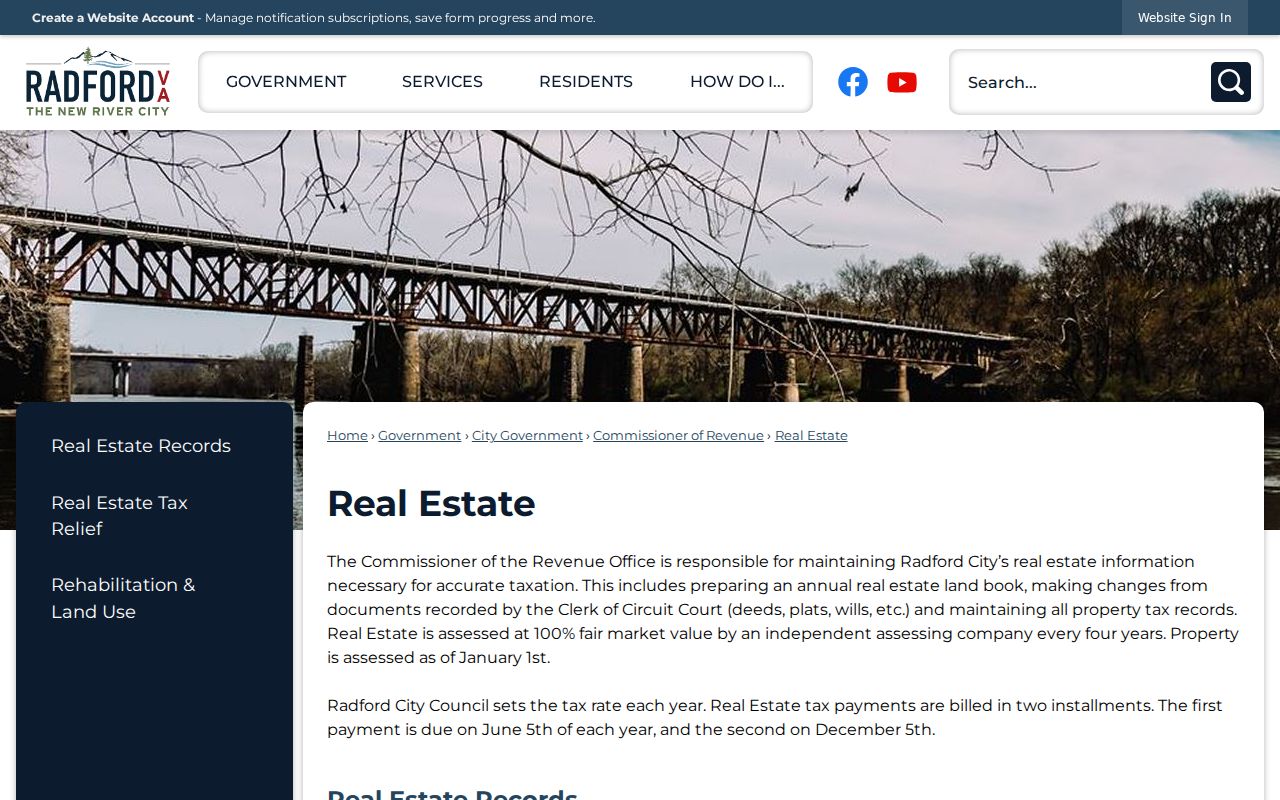
Match the tax value to the assessment year before comparing it with a newer sale.
Radford's 2026 Rate and Relief Rules
Radford's 2026 real-estate tax rate is $0.84 per $100 of assessed value. That is up from $0.82. The change takes effect January 1, 2026. Elderly and disabled relief carries stated limits. Maximum income is $30,000. Combined financial worth is capped at $80,000, with exclusions the office defines. These figures belong to the 2026 tax year. Confirm them before relying on them later.
Relief questions go straight to the Commissioner of the Revenue. That office is the local contact for the program and its application. The thresholds alone do not settle eligibility. Ask which form, what proof, and what annual review the office requires. Read the relief record and the assessment record separately; both feed the bill, but each answers its own question.
The Commissioner's current information page is the source for the rate and relief thresholds.
How to Check a Radford Tax Bill
Radford's Treasurer publishes payment instructions but no public bill-search form. For a balance or an older account, take the PIN or tax account from the parcel card. Then call the Treasurer. The office can confirm which account details it needs. It can also say which payment status it will verify. A public page alone never proves a particular bill was paid.
- Find the Radford parcel card and copy its PIN or tax account.
- Contact the Treasurer with that key and ask which bill year and balance are current.
- Confirm payment status and any delinquency charge with the office, not from a mailing address alone.
- Ask whether the parcel appears in a current land-sale notice or notification list.
- Assessed value
- The value used in the city's real-estate tax calculation.
- Installment
- One scheduled part of the annual bill, with a separate due date.
- Tax relief
- A program administered by the Commissioner under stated qualifications.
- Tax lien
- A claim for unpaid tax that the Treasurer says attaches to the land.
Radford Tax Due Dates and Charges
The Treasurer sets two installments: June 5 and December 5. Current notices list a 10 percent penalty on delinquent real-estate tax. They also list 10 percent annual interest and a $20 administrative fee. Two more rules matter. Never receiving a bill does not waive charges. Liability is still prorated between buyer and seller at settlement.
An escrow account does not shift responsibility. The owner must still make sure payment reaches Radford on time. A closing statement may divide the tax between the parties. But the Treasurer's account status is the record that counts. Keep the receipt or confirmation tied to the parcel's tax account. If a payment does not appear, contact the office. Reconfirm amounts and dates for the year that applies to you.
The Radford real-estate tax page lists installment dates and delinquency charges.
The city real-estate tax notice shows the current due dates and late charges.
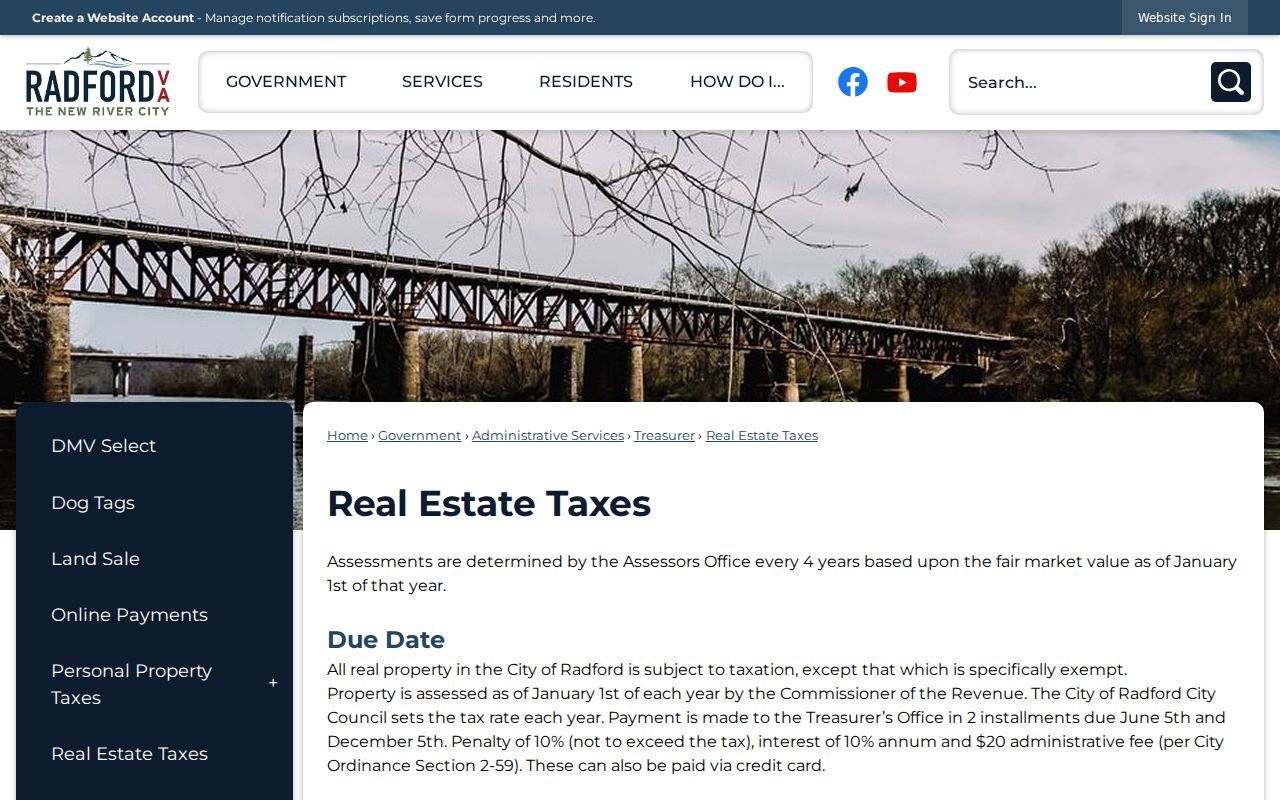
Check the Treasurer's current notice before using an older bill or calendar.
Paying a Radford City Tax Bill
The Treasurer gives property owners four ways to pay a Radford tax bill. You can pay online, by mail, at a drop box, or in person at 619 Second Street, Room 164, Radford. The office phone is 540-731-3661. Regular hours run Monday through Friday, 8:30 a.m. to 4:30 p.m. A second-Tuesday schedule note appears on the page. Call ahead before making a trip. For paying online, the city's official destination is payradfordva.com. The Treasurer links the official Radford payment destination directly.
A payment portal and a bill-search tool are different things. Radford publishes no public form that searches historical tax bills by address. When a payment record looks unclear, use the tax account and ask staff. The record matters at settlement, because a delinquent tax bill attaches to the land itself. Keep the account reference and confirmation number with your closing papers.
The payment screen displays the city-linked route for paying a Radford tax bill online.
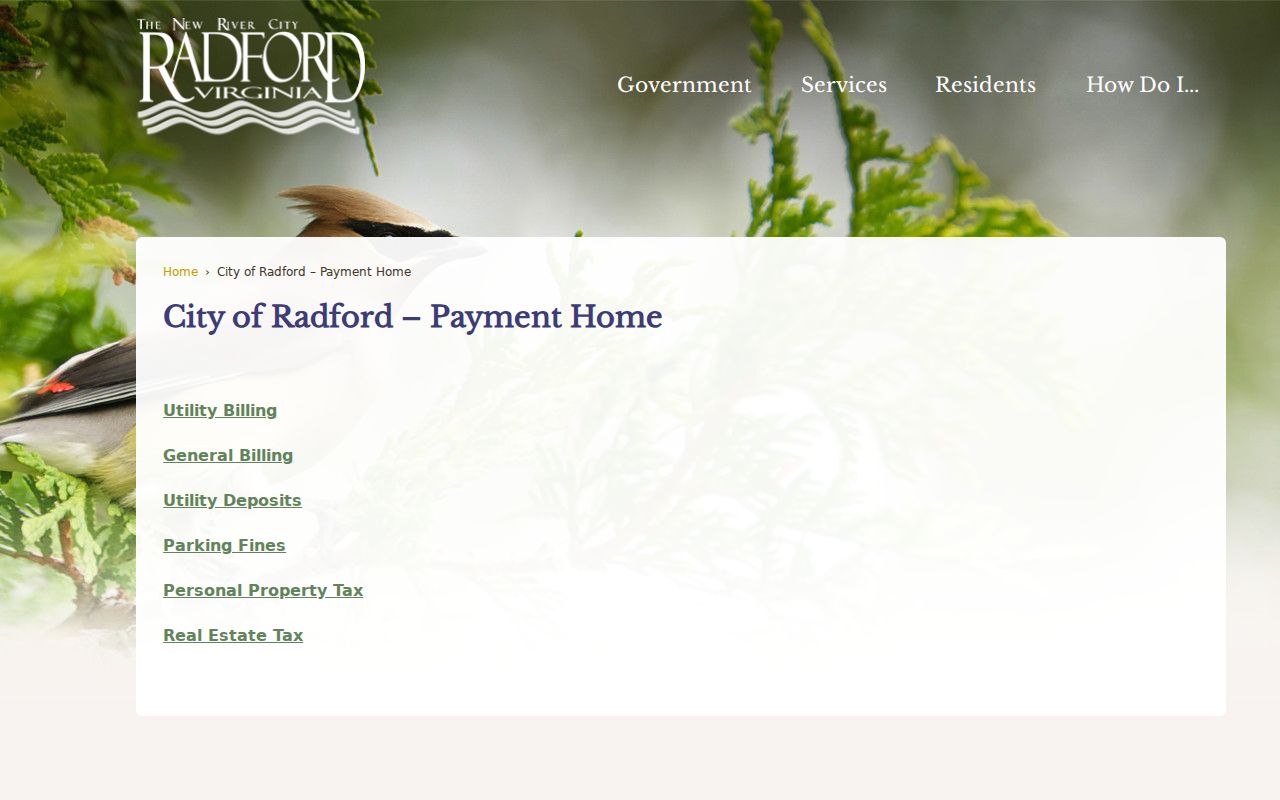
Use the Treasurer's account inquiry for status, and the payment service for a current installment.
Appeal a Radford City Assessment
Bring an assessment question to the Commissioner of the Revenue first. That office maintains the Radford land book and explains the local review steps. Compare the property card against the parcel's recorded deed first. Then check the legal description too. Check the land and dwelling fields too. Note the assessment year. A written question that identifies the PIN and the item at issue helps the office. It lets them pull the right parcel record quickly.
Radford reassesses on a four-year cycle, with assessments dated January 1. The city publishes no appeal deadline, form, or review-board procedure. Confirm those details with the Commissioner for the assessment year in question. Do not assume a deadline from a neighboring locality or a generic Virginia calendar.
Confirm the current window. The local material reviewed does not publish an appeal deadline or board name. Ask the Commissioner for the current form, evidence rules, and filing date before relying on an assessment figure.
Radford Delinquency and Land-Sale Notices
The Treasurer's land-sale page reports that Radford is preparing a new group of properties and offers a notification list in place of a searchable sale roster. Ask the office directly whether a parcel has a current status. Confirm any reported delinquency against the tax account. A page with no listed parcels is no substitute for a direct account inquiry. The Treasurer's land-sale page carries the notice and the signup route.
A distressed-property review should separate three sources. The Treasurer holds the balance and sale status. The Circuit Court Clerk holds recorded deed-of-trust and judgment entries. The court file holds any pending case. A tax notice alone never shows the full title or litigation picture, so use exact party and parcel identifiers when asking for help, and verify payment instructions through the official Radford city domain. The land-sale page reflects the current notification-list approach.
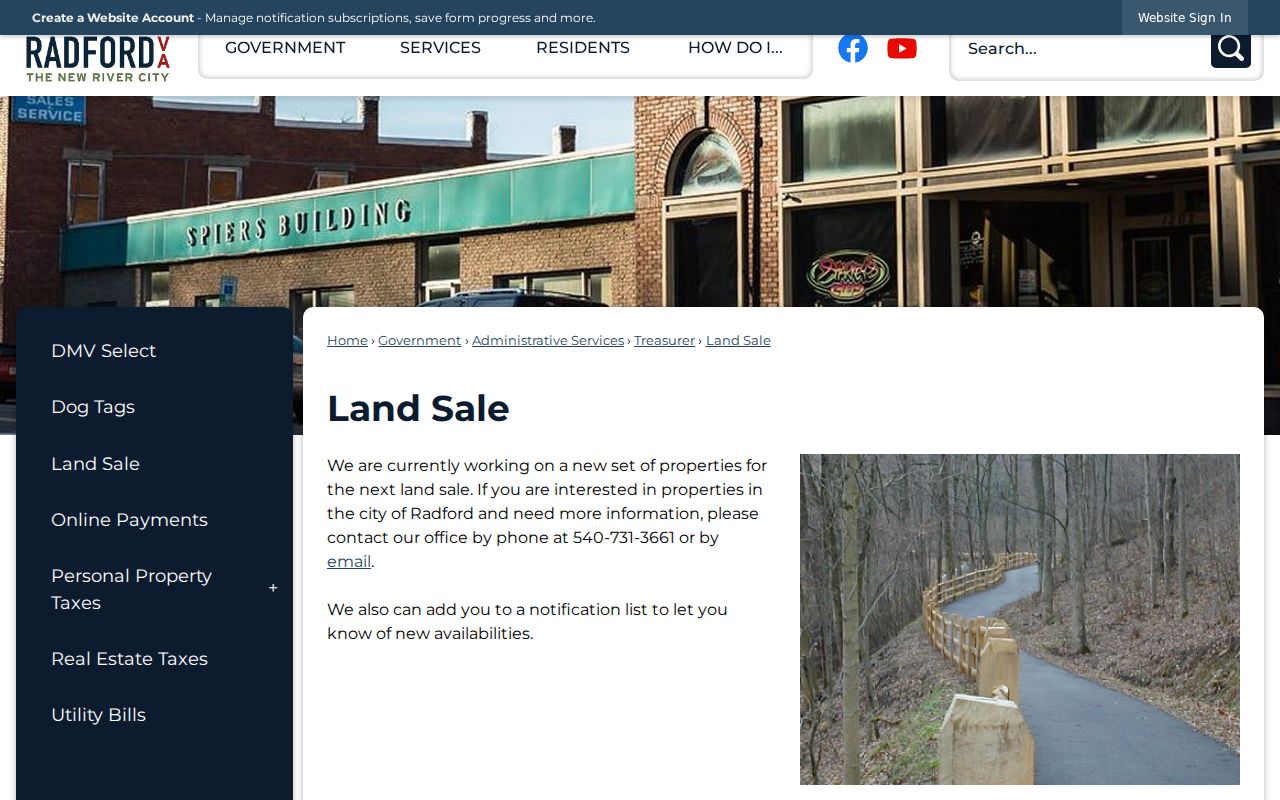
Contact the Treasurer to confirm current offerings and any account balance.
Radford Tax Records by Phone and Request
When online pages cannot answer a bill question, Radford's Treasurer can help. The office is reachable by phone, in person, by mail, and through the listed payment route. For an existing record that the city does not publish online, the Virginia Freedom of Information Act can help. It allows a reasonably specific request to the public body. The office must respond within five working days. It may invoke an additional seven work days. That extension applies when production or a determination needs more time. Charges stay limited to actual reasonable cost. The Virginia FOIA response statute sets those response and cost rules.
Describe a record the office already keeps. An account history or a land-sale notice works well. FOIA does not require Radford to build a new spreadsheet. Nor must it calculate a value that exists nowhere as a record. The Radford Treasurer contact page lists the local tax office. The Treasurer handles tax-account access; the Commissioner handles assessment questions. The Radford value record page explains assessed figures without replacing bill or appeal steps. Direct each request to the custodian who keeps the bill or assessment record.