
What a Radford Property Value Means
A Radford property card lists assessed land, dwelling, and total values. It sometimes shows a sale amount. The Commissioner assesses city real estate at 100 percent of fair market value. The cycle runs four years. So the figure represents full value for tax purposes. It is not a private appraisal. It is not a promise of a sale price either.
Match each value to its source. Assessments come from the annual land book. A sale amount is a recorded transaction field on the parcel layer. A market opinion for a sale or loan needs a qualified appraiser. The public layer does not carry every value for every parcel. Compare year, field name, and deed reference before concluding anything about a Radford property.
| Value | What It Is | Where |
|---|---|---|
| Assessed value | Radford's tax assessment at 100% of fair-market value | Commissioner's land book and parcel card |
| Market or appraised value | A valuation opinion; no separate appraisal field was captured | Qualified appraiser, not the parcel map |
| Last sale amount | SALE_AMOUNT when populated, tied to a recorded transaction | Parcel layer and deed reference |
| Land and dwelling | Separate component values and a total where populated | Commissioner's parcel card |
Radford's ratio is 100 percent of fair market value under the Commissioner's published method. A sale amount reflects one transaction and its terms, while the assessed total is set for taxation on the city's cycle. For bills, relief, or appeals, use the separate Radford property-tax information.
Radford Land and Dwelling Values Are Separate
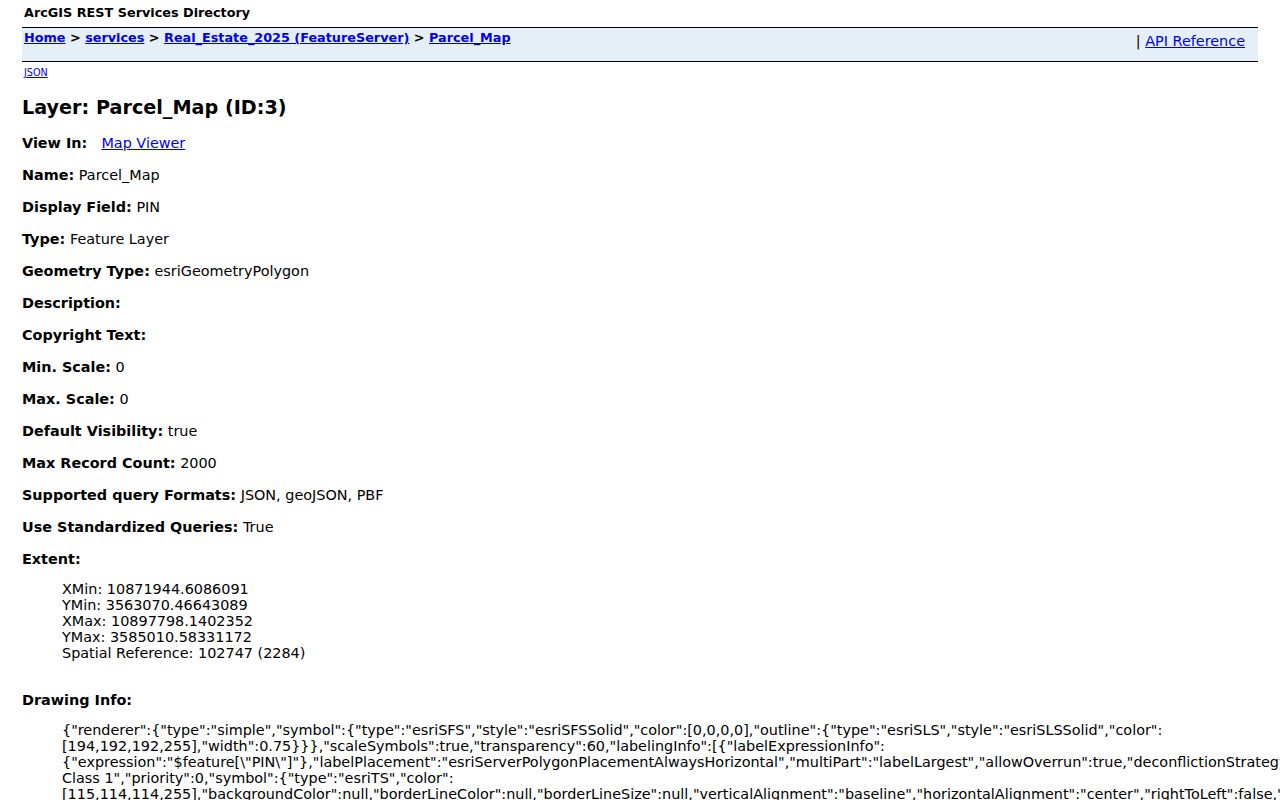
The Radford public parcel layer includes LAND_VALUE, DWELLING_VALUE, and TOTAL_VALUE, along with land and dwelling size fields where populated. Those fields help show how the parcel card divides the assessment, but the map service is not an appraisal report. A missing component can reflect what is present in the public layer, not proof that the land or structure has no value.
The same service includes TAX_CATEGORY, ZONE, WARD, and a direct property-card link. Read those fields with the PIN and tax account, especially when comparing two parcels. Different lot size, classification, structure data, or assessment year can explain why totals differ without saying what either property would sell for.
The Radford parcel layer documents value and size fields.
The captured field list shows how land, dwelling, and total values are stored.
Treat the component fields as an inventory of the record. Confirm any disputed Radford value with the Commissioner.
Radford's Four-Year Assessment Cycle
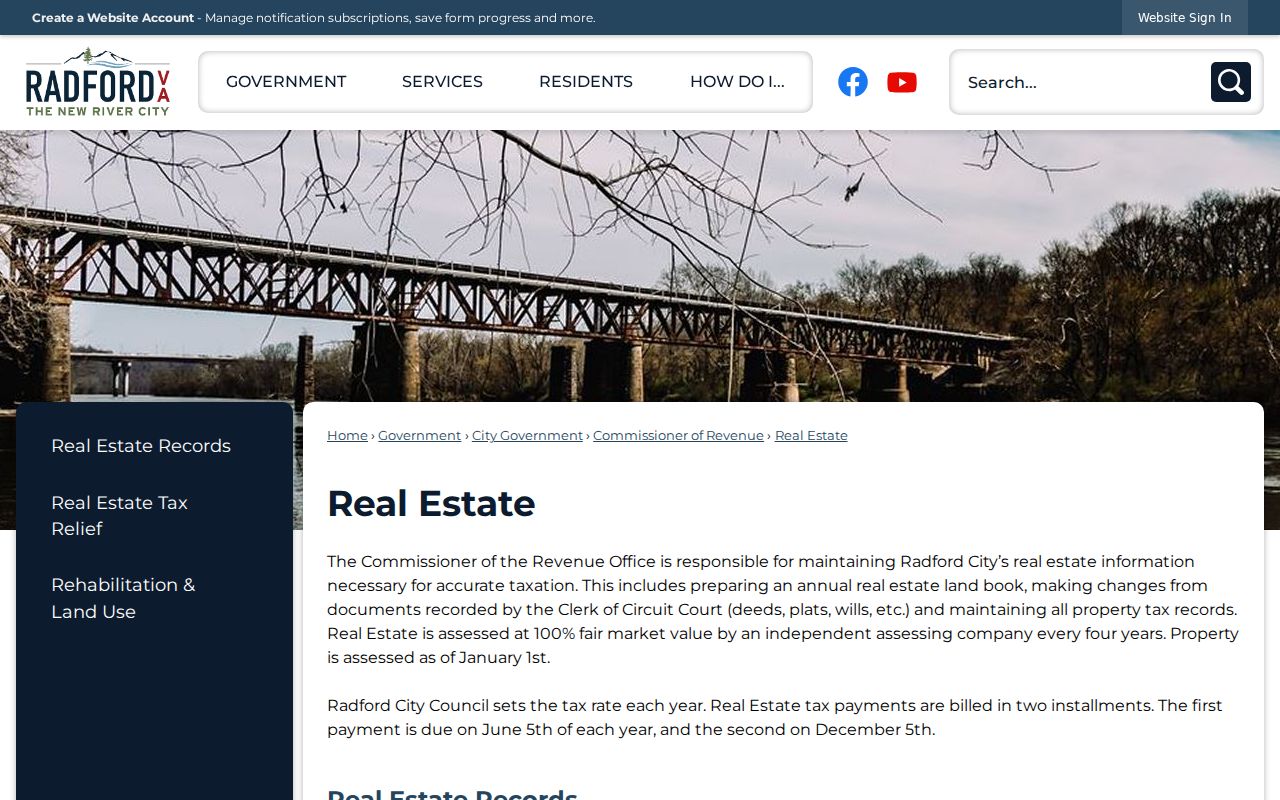
The Commissioner sets Radford's real-estate assessment at 100 percent of fair market value every four years, with January 1 as the annual assessment date. The office maintains an annual land book and updates it from deeds, plats, and wills recorded by the Circuit Court Clerk. A transaction can therefore appear in a deed before it appears in the current tax-year card.
When comparing values, note the assessment year and compare like parcels only after checking their PIN, land size, dwelling data, zoning, and tax category. Radford does not publish a fixed number of days for an owner-field or value update following a sale. Ask the Commissioner which land-book year is displayed before treating a new deed price as a change to the assessed figure.
The Commissioner's real-estate page describes the local method and cycle.
The assessment-page capture shows the 100-percent standard and four-year schedule.
Check the assessment year before comparing a parcel value with a newer transaction.
Radford SALE_AMOUNT Is Not an Appraisal
The parcel layer may carry SALE_AMOUNT along with INSTRUMENT_ID, DEED_REF, and RECORDED fields. A sale amount is a transaction clue. It is not a valuation opinion. The public layer does not establish that every parcel has a complete price history. When the amount matters, the recorded deed and its stated consideration supply the context.
Compare the date and legal description with the parcel card first. A transfer may involve an estate, related parties, or a partial tract. The number does not explain its terms. Radford's assessed total remains a tax figure. It stays a tax figure whether or not it matches the last recorded amount.
The Radford recording page describes deed consideration and the parcel details a deed must carry.
Find a Radford City Property Value
Use the Radford Real Estate App to find a parcel by address, owner, tax ID, or map parcel. Open the property card. Compare LAND_VALUE, DWELLING_VALUE, TOTAL_VALUE, sale amount, size, classification, and recorded references. Keep the PIN and tax account with the result so the same parcel can be traced into another city record.
The Commissioner answers assessment questions. If a field is missing or a deed looks newer than the card, ask which land-book year the display reflects. The Treasurer handles the tax bill. A sale appraisal sits outside the parcel card.
- Search the Radford Real Estate App by address or an exact PIN or tax account.
- Open the parcel card and record the assessment year, land value, dwelling value, and total.
- Read SALE_AMOUNT with the deed reference and recorded date when a prior transaction matters.
- Ask the Commissioner about a missing field or assessment question; use a licensed appraiser for a market opinion.
- Assessed value
- The annual tax value entered in Radford's land book.
- Market value
- A price estimate for an open-market transfer; it may differ from a recorded sale.
- Assessment level
- Radford publishes a 100-percent-of-fair-market-value assessment standard.
- Sale amount
- A transaction field where populated, not an appraisal conclusion.
Radford's 2026 Tax Rate Is a Separate Figure
Radford's 2026 real-estate rate sits at $0.84 per $100 of assessed value. The rate rose from $0.82. It took effect January 1, 2026. Applying that rate to a parcel's assessed figure produces the tax charge, but the rate itself says nothing about land, dwelling, or total value fields, which keep their own meanings in Radford City property records. A tax bill and an assessment record are related documents, yet they answer different questions. The Commissioner's 2026 information publishes the rate. The Commissioner also posts elderly and disabled relief thresholds, subject to exclusions. Relief adjusts the tax obligation under program rules, not the market value of a property. For bill dates, charges, relief steps, or appeal details, the Radford property-tax page lists the Treasurer and Commissioner sources.
Radford's 2028 Reassessment Procurement
Radford's next real-property reassessment is planned for 2028, matching the city's four-year assessment schedule. The Commissioner's page reports that the procurement for that work closed August 14, 2026. The notice concerns the contract leading to a future valuation update, not a new current value for any single parcel. When new assessment figures appear, check the parcel number and year first. A newer assessed total can reflect the next citywide process, while an individual sale amount reflects one transaction in the deed records. The public app's 2025 service and the Commissioner's reassessment notice therefore describe different layers of the local value system. The Commissioner's page carries the current assessment and the procurement notice.
What a Radford Assessed Value Cannot Tell You
A Radford assessed value exists to support taxation. It cannot state what an owner will receive in a sale, guarantee a buyer's offer, or replace a licensed appraisal. The annual land book also carries a January 1 assessment date, so a later sale or deed may not yet appear in the current record. Before drawing a conclusion from a number, compare the year and source field.
- Assessed value
- The value used for Radford's real-estate tax calculation.
- Market value
- An estimate of a property's likely exchange under defined conditions.
- Assessment cycle
- Radford's four-year schedule for its full-value assessments.
- Sale amount
- A recorded transaction field that may be present in the parcel layer.
Value versus price. Radford's assessment is a tax record, not an appraisal for a sale or loan. Ask a licensed appraiser for a market-value opinion.